
Prioritizing Quality Over Quantity in Academia

It is up to all of us to make academia a better place. As we take on roles as members of tenure committees, doctoral committees, editorial boards, department chairs, and deans, we have a choice to focus on the quality rather than the quantity of academic ideas. I believe that most academics are intrinsically motivated and do not require additional incentives. Therefore, academic institutions should focus on trusting their faculty, providing training, and offering resources, rather than measuring their performance. For example, at Copenhagen Business School, applicants can upload a few selected publications for evaluation. This approach allows assessment committee members to concentrate on the quality of the submitted work by thoroughly reviewing it, rather than merely counting the number of publications. Similarly, the Journal of Supply Chain Management has implemented initiatives to enhance the skills of authors and reviewers. These include paper development workshops and a unique reviewer development program aimed at providing better training and support.
How the Term “Supply Chain Management” Was Coined
It is widely known that the term “supply chain management” was popularized by Keith Oliver, among others, in the early 1980s. Interestingly, in a 2003 strategy+business article, Oliver has revealed that, looking for a catchy phrase, his consulting team originally proposed the term “integrated inventory management” (I2M). While, in our modern understanding, SCM is focused not only on intra- but also inter-organizational coordination and typically takes a more strategic perspective, “I2M” already focused on “tearing down the functional silos that separated production, marketing, distribution, sales, and finance to generate a step-function reduction in inventory and a simultaneous improvement in customer service”. Later, at a key steering committee meeting, Oliver’s team introduced “I2M” but “the phrase failed to resonate with participants”. One of the managers, a Mr. Van ’t Hoff, challenged Oliver to explain what he meant by “I2M”. I am not sure whether Mr. Van ’t Hoff is aware of it, but this moment marked the birth of the term “supply chain management”:

Contract Manufacturing
How does contract manufacturing work? The following figure illustrates this.

The Smile of Value Creation

Mudambi (2008) notes that “value-added is becoming increasingly concentrated at the upstream and downstream ends of the value chain” and that “activities at both ends of the value chain are intensive in their application of knowledge and creativity”. Value-added along the value chain is, thus, represented by a “smiling curve”.
Mudambi, R. (2008). Location, Control and Innovation in Knowledge-intensive Industries. Journal of Economic Geography, 8 (5), 699-725 DOI: 10.1093/jeg/lbn024


Africa Logistics Initiative

The Kühne Foundation invited me to support its Africa Logistics Initiative. Consequently, I have spent the last weeks teaching in logistics and supply chain management at the National Institute of Transport in Dar es Salaam, Tanzania. It has been a great experience.
Theory Building and Theory Testing
Research revolves around theory. Hereby, the role of researchers is twofold: Researchers can either start with real-life observations and produce a set of propositions that summarize a new theory (inductive theory building), e.g., using grounded theory research, or start with an existing theory for formulating hypotheses and use data to test them (deductive theory testing), e.g., using structural equation modeling.
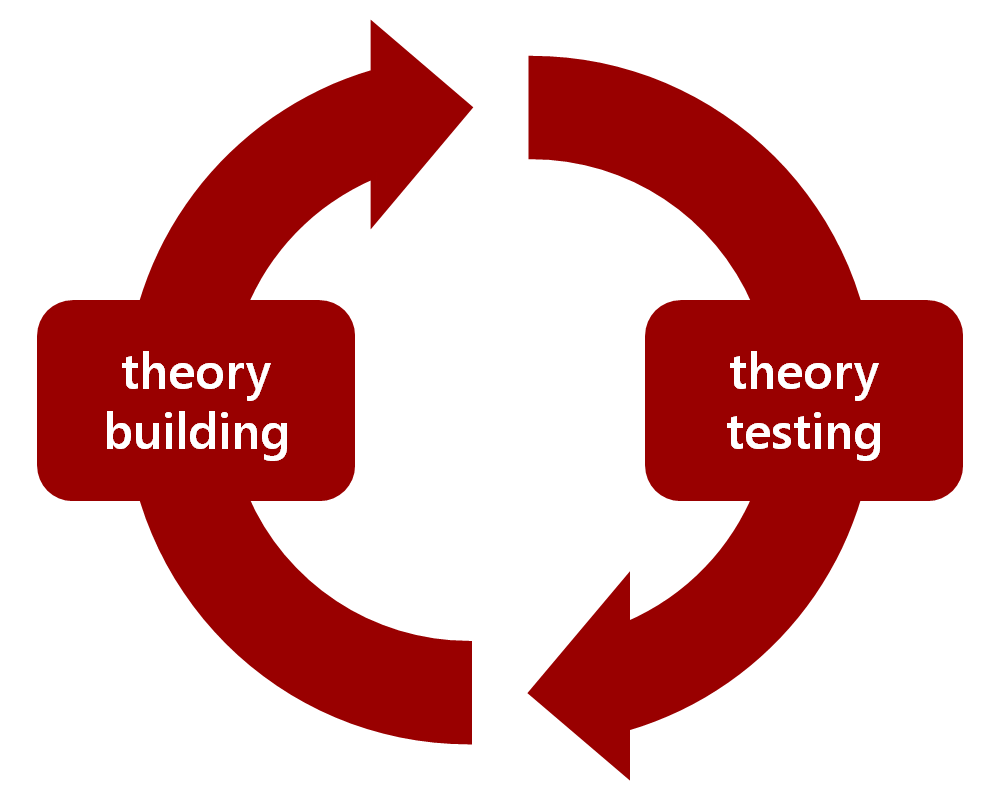
For an extensive investigation of this dual role see Colquitt and Zapata-Phelan (2007).
Colquitt, J. & Zapata-Phelan, C. (2007). Trends in theory building and theory testing: A five-decade study of the Adademy of Management Journal. Academy of Management Journal, 50 (6), 1281-1303 DOI: 10.5465/AMJ.2007.28165855
Supply and Demand Network Management
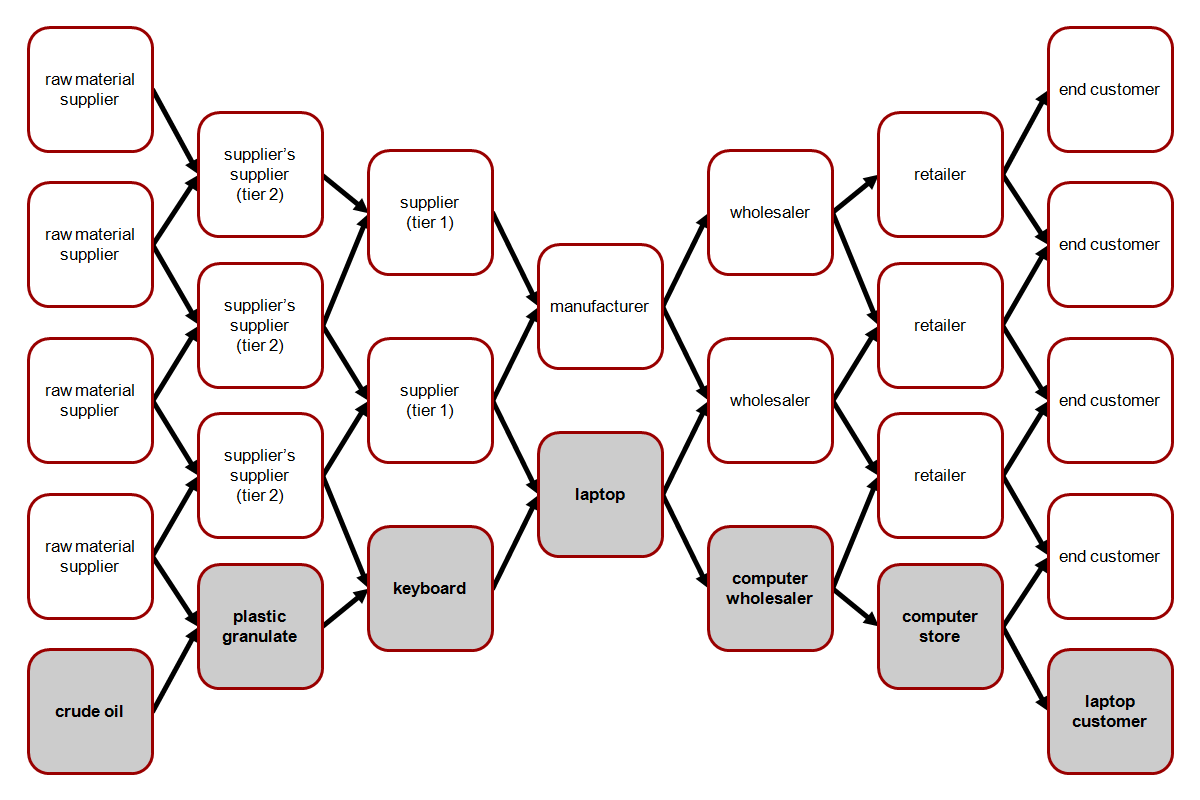 “Supply chain” is not the right word. The system it describes is not restricted to the supply side and it does not take the form of a chain. Should it be “supply and demand network management” rather than SCM?
